Taking Care of Your Workshop, Your Participants, and Yourself: Facilitating Professional Development for Fellow Educators
 January 21, 2026 | Post by : Amy Ruth
Enhancing the knowledge of peers is not only exciting and rewarding — it can also be overwhelming.
In this blog post, you’ll find proven practices to better equip you for working with adult learners generally and teachers specifically. Included below are checklists for facilitators to plan their professional development (PD) session and to coordinate with hosts regarding site and equipment details, as well as considerations to keep in mind as you maintain your mental wellness throughout this PD process.
My goal is to provide specific guidance that can help make this all more systematic, more customizable, and less overwhelming.
What to Consider as a PD Facilitator
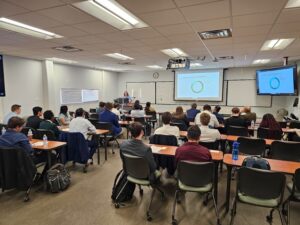 In July 2022, I traveled to Michigan State University to learn how to best facilitate the CyberAmbassdor / Engineering Futures training, which helps professionals in Science, Technology, Engineering, and Mathematics (STEM) further develop their skills in communication, teamwork, and leadership. Developed through a grant by the National Science Foundation, this training reinforced for participants best practices for teaching adults: provide content relevant to their professional life, connect this content and session activities to the learning objectives of the training, and give opportunities to reflect and identify when and how to apply the content (Luchini-Colbry & Colbry, 2024).
The facilitators’ checklist below incorporates ideas from this training with some additions from my experiences with TREC. Feel free to modify the following as you prepare to lead your own workshop.
What is your proposal for a possible training?
- What is your proposed training about?
- Your target audience
- Learning objectives
- Learning outcomes tied to objectives
- Learning activities tied to objectives and outcomes
- Connections to professional standards and competencies
- Agenda summary
- Required supplies and equipment
What is the capacity for your training?
- Maximum number of participants
- Training modality: in-person, hybrid, one session vs. multiple sessions, etc.
- Possible co-facilitators to help with delivery
- Facilitator biography or relevant background information
- Date/time/location (if applicable)
What publicity and/or recruitment strategies will you use to motivate teachers to join/participate?
- Give advance notice on an application activity so participants can bring ideas from their work
What are possible barriers/challenges to delivering this training?
How will you obtain feedback from participants?
- Platform: physical handouts, online surveys (e.g., Google Forms), response apps (e.g., Doodle)
- Questions can be open-ended AND/OR multiple choice
- Input data into an analyzable form
What to Consider as a PD Facilitator at a Third-Party Meeting, Conference, etc.
Leading a PD session at, say, a professional conference can be less stressful than at your “home” site since there are fewer aspects of the actual training to coordinate (e.g., location, time, equipment, etc.).
However, advance preparation is key by confirming the following:
Contact information for the host organization, including a “day of” contact for any issues/troubleshooting
Session location
- Where will the session be held: street address, building, room number, parking
- Access to the room
- Whether the room is modular or not, i.e., can you move chairs/desks/walls to accommodate activities and other interactions between participants?
- How far in advance you can accesss the meeting room and equipment?
Equipment and connections needed to present from your laptop, email, flash drive, mobile device, etc.
Hands-on materials including writing instruments, post-its, poster paper, etc.
Expected attendance
Incentives by the organization for participant attendance, e.g., is the training required, is food being provided, etc.?
Maintaining Mental Wellness
 In August 2024, I began my two-year exploration of teacher leadership through the Tucson Regional Educator Collaborative (TREC). Included in that were monthly book studies of Onward: Cultivating Emotional Resilience in Educators and Mentoring Each Other: Teachers Listening, Learning, and Sharing to Create More Successful Classrooms. And in February 2025, Dr. Tim Grivois of TGS Educational Consulting guided us through the “Principles of Adult Learning” framework. Taken together, these experts provided emotional connections to reinforce what I previously learned about teaching adults.
Above all: you are courageous for bringing a meaningful topic to your educator community.
During recruitment, publicity, and planning, a lack of response or even outright rejection may indicate a gap in:
- Perception or communication of topic
- Fit of topic to needs of target audience
- Cost / benefit of time, energy, money
- Availability of participants
Rejection of your PD is not a rejection of you.
Consider preparing a menu of topics for your target audience to select.
When receiving feedback:
- Recognize that there are constraints on your time and resources that affect what you are able to deliver during a PD session.
- Acknowledge that you are human and make mistakes; learning from mistakes is even more important than the mistakes themselves. Consider how to respond before reacting if an answer is even necessary.
- Adopt a grateful attitude that someone shared their experience with you versus silence that contributes to no improvements.
- Enlist a trusted colleague to read through the feedback and help you filter for what is constructive. (Alternatively, read the feedback as if you are your best friend communicating it.)
Pitch your Workshop Topic!
The considerations highlighted in this article are intended to encourage you to proceed with sharing your knowledge and experiences with peers. Learning with and from fellow educators helps me become even more effective and fulfilled in my vocation as a teacher, especially when the facilitator or trainer is passionate about their topic. When I’m the facilitator, I learn from participating professional educators as well. So, write your proposal, find that match between what you are offering and who wants to benefit, and maintain your mental wellbeing!
Bibliography
Aguilar, E. (2018). Onward: Cultivating emotional resilience in educators. Jossey-Bass, a Wiley Brand.
Bain, P. M., & Agarwal, P. K. (2019). Powerful teaching: Unleash the science of learning. Jossey Bass Inc.
Grivois, T. (2025). “Principles of Adult Learning.” Prepared for delivery at the February TLC5 Meeting.
Luchini-Colbry, K. & Colbry, D. (2024). “Session Planning – Worksheet for Facilitators.” CC BY-NC-SA 4.0. https://creativecommons.org/licenses/by-nc-sa/4.0/deed.en
Parker, L., & Vetter, D. (2020). Mentoring each other: Teachers listening, learning, and sharing to create more successful classrooms. Pembroke Publishers Limited.
About the Author
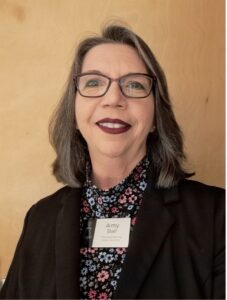
A multifaceted professional, Amy Ruth Irwin Ball, MBA, MA, brings a wealth of knowledge to her roles as a Mathematics Educator for Tanque Verde High School, TREC Teacher Leader (Cohort 5), and a Facilitator for Engineering Futures / CyberAmbassadors.
Following 13 years in manufacturing engineering where she trained colleagues, Amy Ruth switched to a career in teaching where her background gives her a unique perspective on the challenges and opportunities facing today’s learners. Now after 14 years in the classroom, she continues to help students and professionals alike master skills from academic fundamentals to leadership.
Since 2022, for example, she has facilitated 16 workshops for more than 170 educators and 160 engineering university students in possibility thinking, soft skills (communication, teamwork, and leadership), Google applications, and pedagogical book studies. Through her work in the TREC Teacher Leader program, she continues to bring the power of research-affirmed, pragmatic best practices to pre-service teachers and current educators.
Amy Ruth earned a bachelor’s degree in Industrial Engineering from Mississippi State University, an MBA with a focus on Entrepreneurship from the University of South Carolina, and a Master of Arts in Teaching from Southern Illinois University – Edwardsville.
When she’s not helping others learn, you can find her recharging in nature or spending time with family and friends in her Arizona home.
Amy Ruth is passionate about empowering others to achieve their goals and rediscover their capabilities. For more information on workshop topics, please contact her at airwinball@tanq.org.
Related Post
April 11, 2023 | Post by : Michelle
Lessons Learned on a Self Care CoP Journey By Michelle Parces, MHP As I have gone through this journey, planning a CoP(Community of Practice) and having one, it has led me to really think about the concept and practice of self care. Although this journey didn’t go as I expected, I believe it has been…
Learn More

January 9, 2025 | Post by : Cerelo
Roots & Marigolds: My International Teaching Odyssey By: Cerelo Villagracia Flores, Ph.D. It might surprise you that many of the teachers in the United States are not American citizens; like myself, international teachers abound in the country of the Star Spangled Banner. This became a reality in 1961 when the Mutual Educational and Cultural Exchange…
Learn More

March 23, 2026 | Post by : Karyn
My goal with this post is to (1) model transparency, (2) empower thoughtful Artificial Intelligence (AI) use, (3) and make AI feel approachable — not intimidating — for educators. To start, I keep pedagogy first, not tools first. AI is not my teaching plan, my instructional design, or my professional judgment. Instead, it is a…
Learn More